No-Code Workflow

Drag, drop, publish. No code

Build a gallery by moving images around, not by writing markup. Everything happens inside WordPress — upload, arrange, style, place on the page — and it saves itself as you go.

Start to finish

Four steps between a folder and a live page

Step 1

Bring the images in

Drop files straight into the gallery, pull from the media library, or import a whole folder or ZIP at once. Videos sit in the same gallery as photos.

Step 2

Arrange by dragging

Order is whatever you drag it to. Move one image or reorder a whole set, and add titles, captions, tags, people and locations while you are in there.

Step 3

Pick a look

Choose a layout, apply a template, adjust colours and spacing. The preview updates as you go, so there is no publish-and-check loop.

Step 4

Place it on the page

Drop the widget into Elementor or Divi, use the Gutenberg block, or paste a shortcode. Same gallery, wherever it lands.

The editor

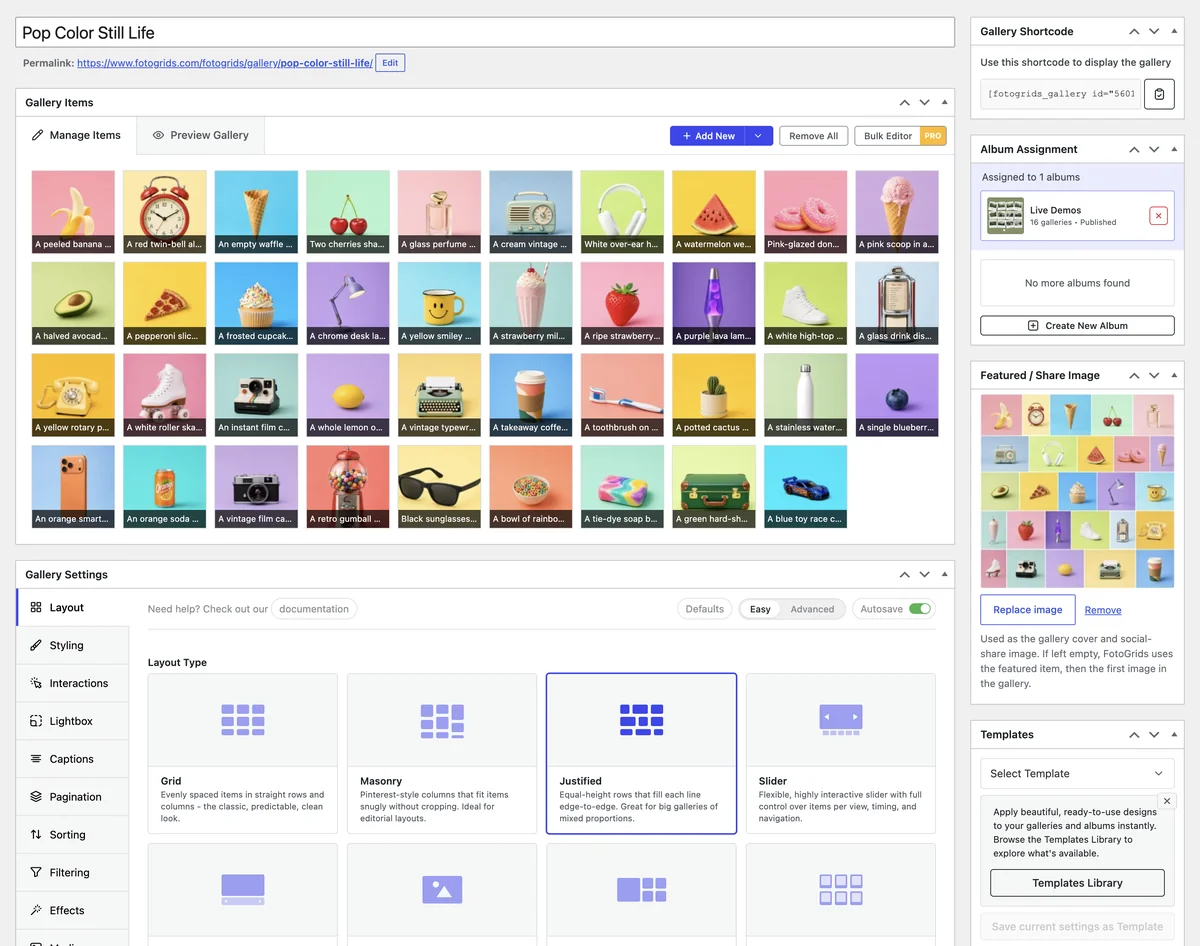
The gallery editor is the gallery

What you arrange is what visitors see. No separate preview window, no code view to fall back into, and nothing to remember to save.
FotoGrids gallery editor with 44 items, layout type options, album assignment, featured image and shortcode sidebar
While you work
Getting media in
Working at volume
Place it anywhere

Built once. Dropped in wherever you work

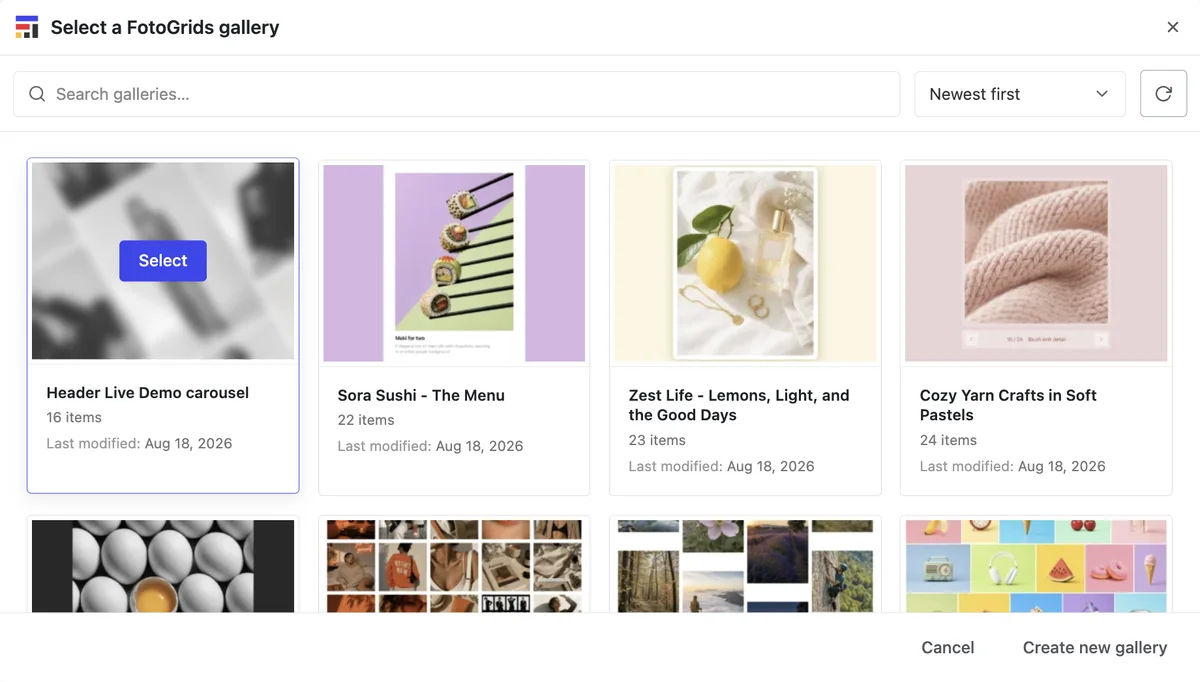
The gallery is a WordPress object, not a builder-specific block. Whatever you use to build pages, there is a native way to place it — and switching builders later does not mean rebuilding galleries.
FotoGrids Select a gallery modal showing gallery thumbnails with item counts, search and sort by newest first

A block in the post editor

If you write posts in the block editor, add the FotoGrids block the same way you add an image. Pick the gallery, keep writing.

FotoGrids Select a gallery modal showing gallery thumbnails with item counts, search and sort by newest first

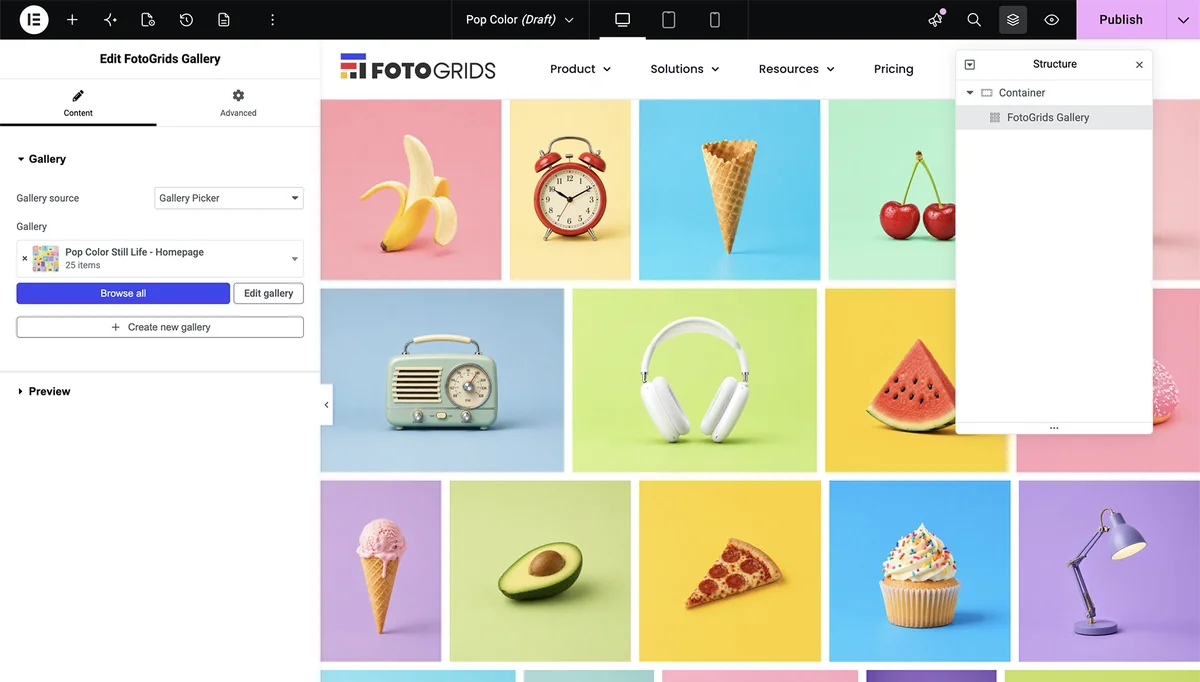
A native Elementor widget

Search “FotoGrids” in the widget panel, drag it onto the canvas, pick the gallery. Layout and style controls appear in the Elementor sidebar alongside everything else.

FotoGrids Gallery widget in the Elementor editor, with the gallery picker panel on the left and a live grid preview on the right

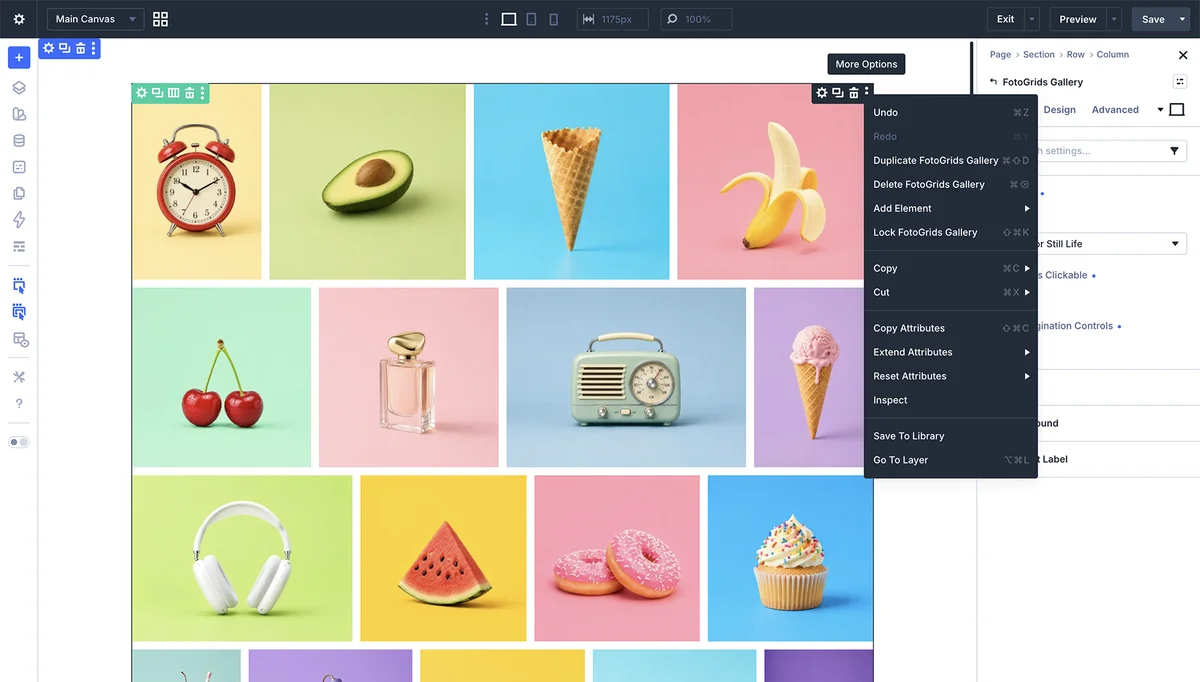
A Divi module in the builder

The FotoGrids module sits in the Divi module list. Insert it, select a gallery, and Divi’s design tabs apply on top of the gallery’s own settings.
FotoGrids Gallery module in the Divi builder, with the gallery grid on the canvas and the module's right-click options menu open

One line, anywhere WordPress renders

Theme template, widget area, custom field, a builder that has no native integration — the shortcode puts the same gallery there with the same settings.
FotoGrids Select a gallery modal showing gallery thumbnails with item counts, search and sort by newest first
Day-to-day

Spend less time managing galleries

Import, edit, migrate, and sync in fewer steps — so every gallery is ready faster, with less room for error.

Bulk media import

Import entire shoots from a ZIP or folder in one action — no more dragging files in batches.

Bulk editing

Update titles, metadata, links, and settings across hundreds of images in a single pass.

Gallery & album defaults

Start every new gallery or album with your preferred settings already configured for you.

Import, export & backup

Move galleries safely between sites, keep backups, and restore them without rebuilding.

Migration from other plugins

Bring galleries over from other plugins without rebuilding your work one image at a time.

Media platform sync

Sync from Dropbox, Google Photos, Lightroom, and Instagram — without exporting and re-uploading.
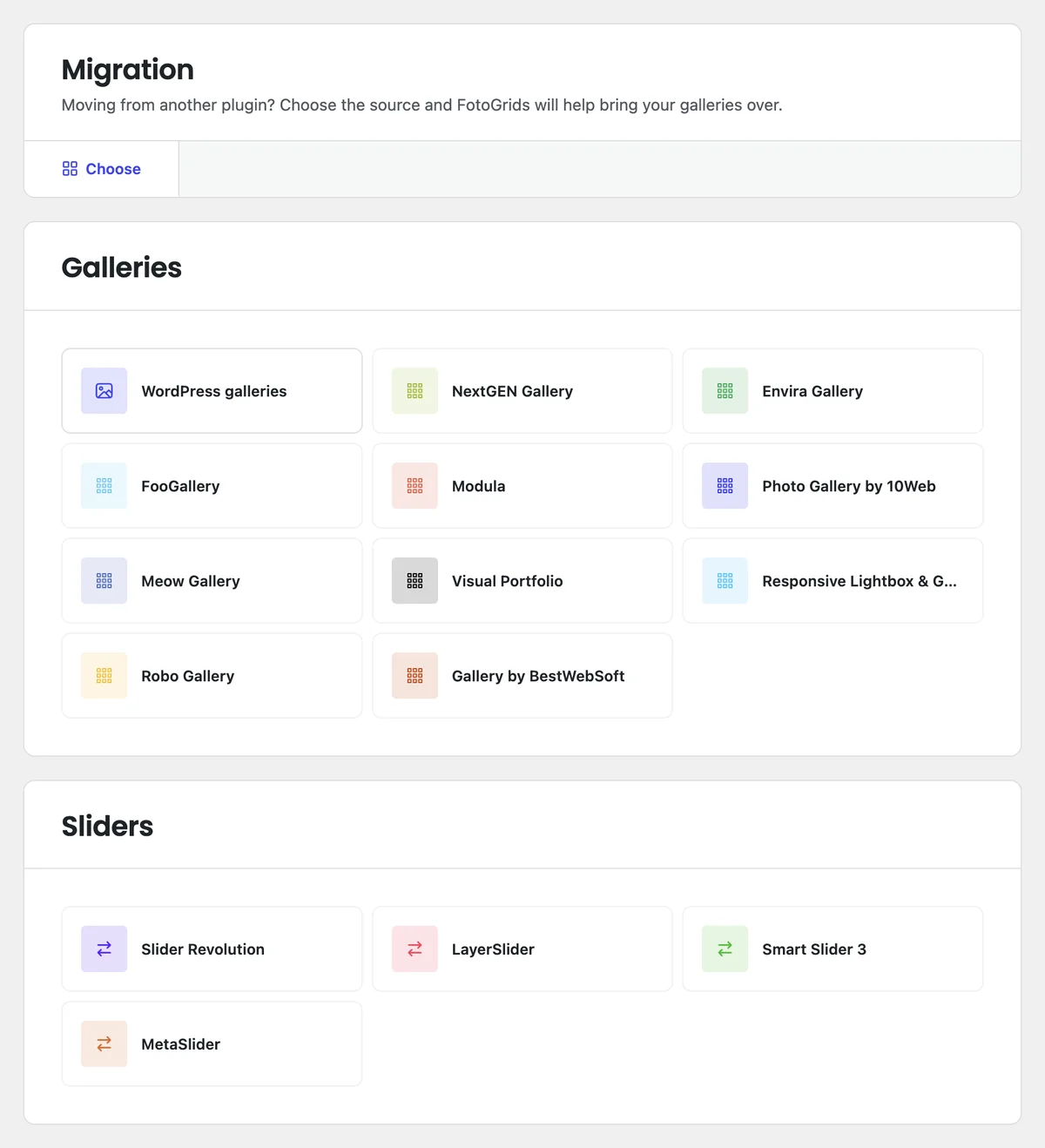
Importing galleries from other WordPress gallery and slider plugins into FotoGrids
Migration

Bring what you already built

Switching gallery plugins usually means rebuilding every gallery by hand, which is why most people never switch. The migration assistant reads your existing galleries and recreates them, so the work you already did survives the move.

What comes across

Galleries, the images in them, their order, and the titles, captions and alt text already attached. Albums map to albums where the source plugin has them. Supported sources include NextGEN, Envira, FooGallery and Modula.

What stays untouched

Your media library. Files are referenced, not copied or re-uploaded, so disk usage does not double and existing image URLs keep working.

If you change your mind

The source plugin is left as it was. Import, look at the result, and only remove the old plugin once the new galleries are on the page and behaving.

When it is forty sites, not one

The same workflow, multiplied safely

No-code stops being a convenience and starts being a requirement when several people touch the same galleries. These are the controls that keep that from going wrong.

Multisite gallery management

See and manage galleries across every site in the network from one dashboard, and share templates across it, without logging into each site in turn.

Bulk gallery & album operations

Update settings, reassign permissions, duplicate layouts or remove in batch across many galleries at once instead of one at a time.

Revision history & one-click restore

Every change is a version snapshot. Compare states and roll back to any of them, so experimenting is not a risk someone has to approve first.

Internal team notes

Private per-gallery notes for the team — creative direction, items flagged for review, context for whoever picks it up next. Clients never see them.

Every workflow covered

Everything you need to keep work moving

And that's only the beginning.

Frequently asked questions

Not to build, style or place a gallery. The shortcode is one line of copy-paste rather than code you write, and the API and hooks exist for developers who want them — they are not a step in the normal path.

None in particular. Elementor and Divi each have a native widget, Gutenberg has a block, and the shortcode covers everywhere else, including themes with no builder at all.

No. The gallery is stored in WordPress, not inside the builder. Changing builders means placing the widget again on the new page — the gallery, its order, its captions and its styling are unchanged.

Autosave keeps the work. When you come back, the gallery is where you left it, including ordering changes you had not explicitly saved.

Direct upload and the media library are in the free plugin. Bulk media import from ZIP files and folders is Pro Plus, along with syncing from Dropbox, Google Photos, Lightroom and Instagram.

The migration reads your existing galleries and recreates them without moving files or removing the old plugin. Existing pages keep rendering as they did until you swap them over yourself.